Visualizing in the Mind's Eye: Icon Design Shapes Mental Imagery of Fire Risks
Wen Xu (Northeastern University), Anjana Arunkumar (Northeastern University), Lace M. Padilla (Northeastern University)

Jump to Discussion
Presentation
- Session
- Form Follows Function
- Time
- Tuesday, Nov 10, 10:18 – 10:27 (US/Eastern) · session 10:00 – 11:30
- Room
- Hall Essex north
Links
Sign in to access the Paper PDF.
- Preprint PDF(opens in new tab)
- Supplemental Material(opens in new tab)
Abstract
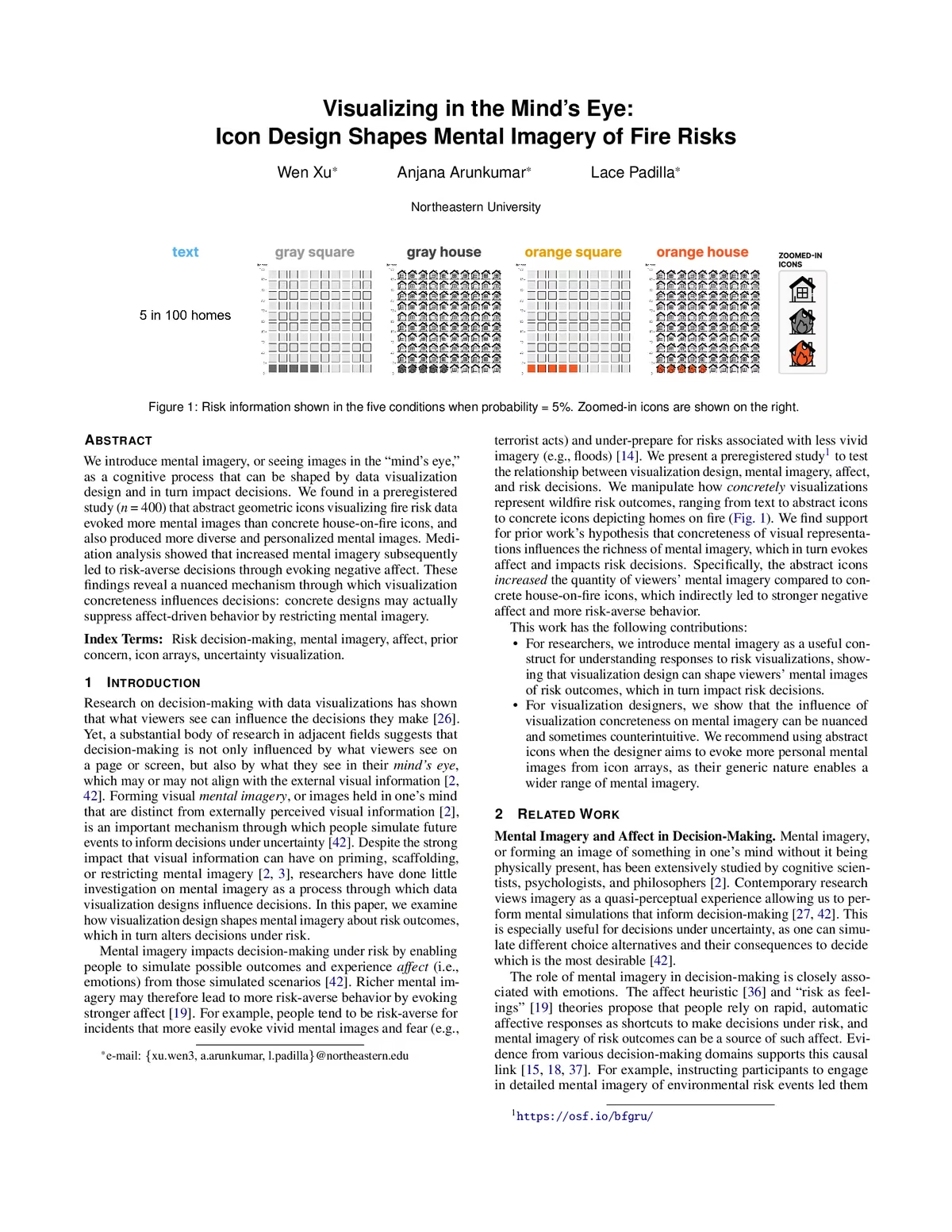
We introduce mental imagery, or seeing images in the “mind’s eye,” as a cognitive process that can be shaped by data visualization design and in turn impact decisions. We found in a preregistered study (n = 400) that abstract geometric icons visualizing fire risk data evoked more mental images than concrete house-on-fire icons, and also produced more diverse and personalized mental images. Mediation analysis showed that increased mental imagery subsequently led to risk-averse decisions through evoking negative affect. These findings reveal a nuanced mechanism through which visualization concreteness influences decisions: concrete designs may actually suppress affect-driven behavior by restricting mental imagery.
For Practitioners
This paper would be of interest for designers of risk communication facing the general public as well as the larger data journalism community. We introduce mental imagery as a useful design objective for visualizations as it shapes affective and behavioral responses to visualizations. We provide empirical evidence that concrete visualization designs may not always facilitate mental imagery, affective response, and risk-averse behavior. Specifically, abstract designs may actually allow for more diverse and personally relevant mental images. We also highlight the important role that viewers' prior concern about the data topic plays in their responses to concrete visualization designs.